Application
An Application is a Python program built with the Kelvin SDK, packaged and uploaded to the App Registry, and deployed to edge locations to monitor and control assets at scale.
Applications are the most tightly integrated program type on the Kelvin Platform. The SDK handles connectivity, data routing, and deployment infrastructure automatically, so the developer focuses on business logic while Operations Engineers manage assets and parameters entirely from the Kelvin UI.
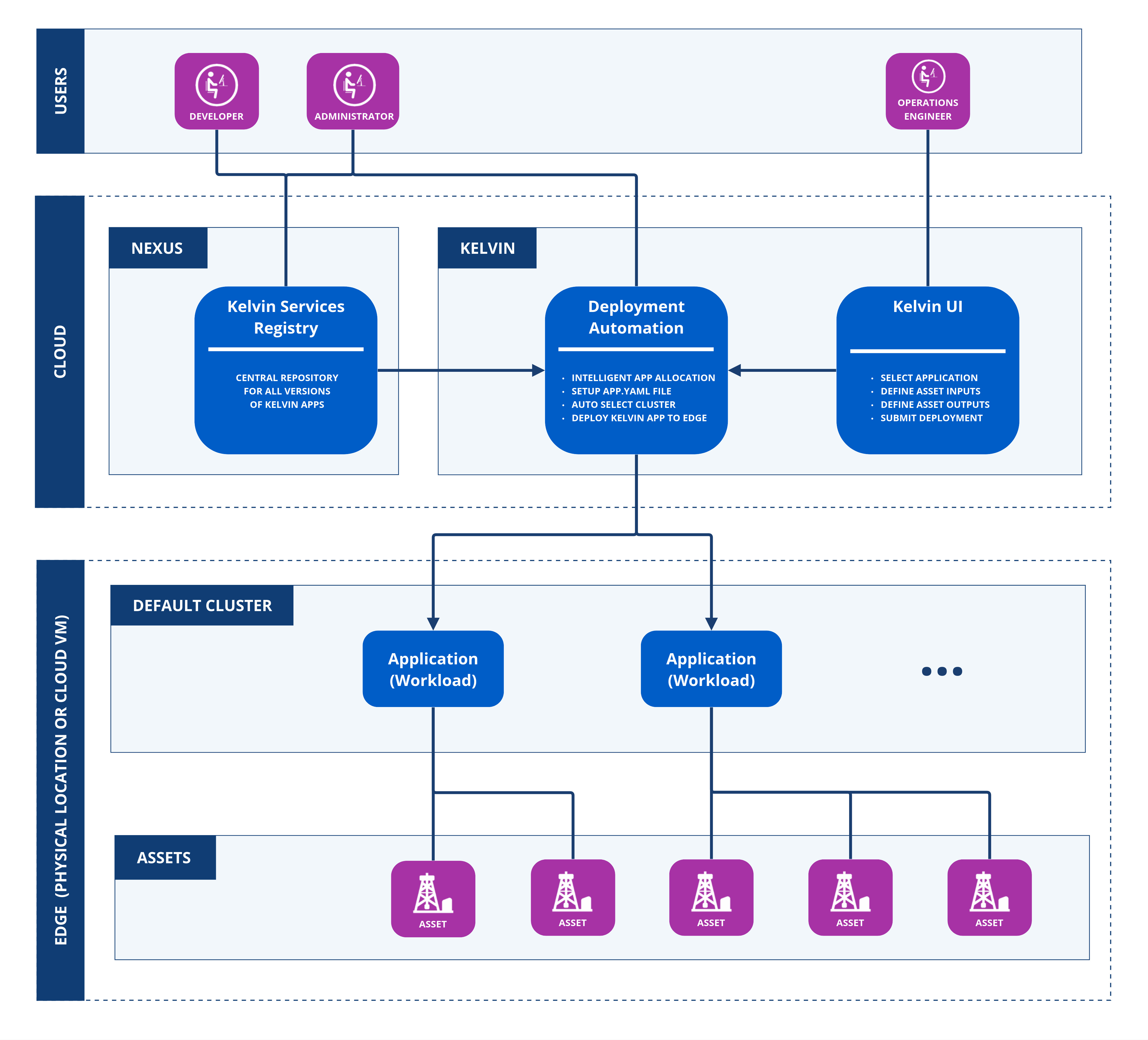
Structure
An Application is designed for clean separation between development, operations, and platform administration. Each role interacts with the same deployed Application in a different way.
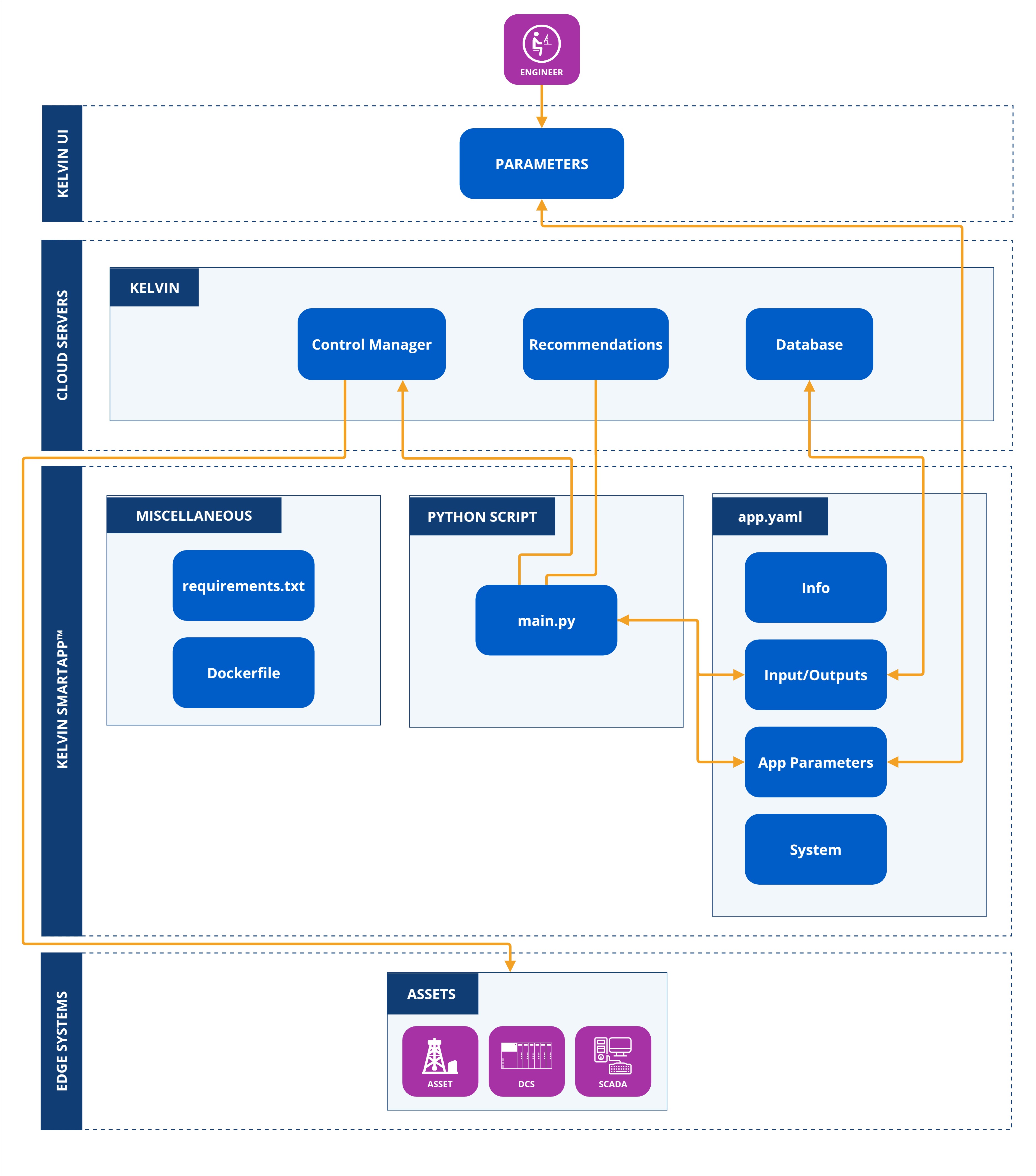
Applications and Docker Apps
Applications vs Docker Apps
An Application is a Python program that uses the Kelvin SDK. The SDK generates much of the deployment configuration automatically, based on global settings from the Platform Administrator and runtime selections by the Operations Engineer. This reduces what a developer needs to configure manually.
A Docker App gives teams full control over the runtime environment and programming language, but connects to the platform through the Kelvin API rather than the SDK. It requires more manual deployment configuration.
Applications have some constraints on flexibility compared with Docker Apps, but bring significant advantages through tight SDK integration with the Kelvin Platform.
Applications as a scaling solution
Applications are an efficient way to take a Python program and turn it into a scalable solution across a global organisation. Operations Engineers need minimal training because the interface is consistent across all Applications, and the deployment process to edge assets is automated.
You can view a practical example from the paper industry where an in-house machine learning model for production quality optimisation was deployed company-wide within minutes.
Advantages and Considerations
Advantages
The Kelvin SDK removes all technical IT and deployment infrastructure work from the developer. Operations Engineers select the assets they want to run on an Application and deploy it without needing knowledge of Kubernetes, the underlying infrastructure, or the internal logic of the program.
- Deploy hundreds of assets to an Application in one step
- Scale operations up or down with minimal effort
- No Kubernetes or IT infrastructure knowledge required
- No knowledge of the software or machine learning model internals needed
- Manage thousands of assets across many Applications from the Kelvin UI
- Manage assets across different versions of the same Application
- Development, operations, and administration can work fully independently, across different teams or organisations
Considerations
Applications are designed for decentralised or large organisations running common models across many assets where scaling is the priority. There are scenarios where additional orchestration considerations apply:
- Clusters are location-specific and Applications need to be assigned to a particular location only
- Each Application needs individually specific parameters per asset
- Clusters experience regular internet outages